Contract mechanics · first-hand evidence · October 2026
Digital Options vs CFDs: How the Contracts Actually Differ
Digital Options and CFDs can sit inside the same trading account while behaving like two different products. The useful comparison is not “fixed time versus leverage.” It is how the position is defined, how profit or loss is calculated, when the position ends, what costs apply and which controls remain available after entry.
Digital Options vs CFDs: The Short Answer
Digital Options and CFDs use different contract logic. In the fixed-time Digital Options workflows we have checked, the trader commits an amount to a defined price condition, sees a potential return before entry and starts the trade with a scheduled expiry or auto-close. The result is then determined by whether the contract condition is met, unless the product also allows an early exit.
A CFD (contract for difference) position is built around the difference between an opening value and a later closing value. Profit or loss changes with the market while the position remains open. Position size, price movement, charges and any leverage or margin rules determine the final result.
That is why “Digital Options = no leverage, CFDs = leverage” is too crude. Deriv’s current comparison uses leveraged CFDs, but the ExpertOption and EO Broker Terms define their Stock Trading products as non-leveraged CFDs. The contract structure matters more than one feature.
Digital Options use a contract duration selected before entry and a known potential return; Deriv CFDs use variable P/L that is known when the position closes.
Primary-source check · October 2026Both currently define Stock Trading as non-leveraged CFD trading.
Primary-source check · October 2026Digital Options vs CFDs Comparison Table
This table describes the product mechanics relevant to the platforms and sources checked for DigitalOptions.co. Individual providers can implement different controls and legal terms.
| Mechanic | Digital Options / fixed-time workflow | CFD position |
|---|---|---|
| Core condition | Meet a defined price condition at the contract endpoint. | P/L follows the difference between entry and closing value. |
| Return before entry | A potential payout / profitability is normally displayed on the ticket we checked. | Final P/L is not fixed before entry because it changes with price movement and closing value. |
| Normal endpoint | Scheduled expiry or auto-close is part of the contract. | Position is normally managed as an open position until it is closed or another product rule terminates it. |
| Position input | Trade amount / investment plus direction or strike condition. | Position size, lots or exposure plus entry price and position direction. |
| After entry | Some products only run to expiry; others add early Sell / Close. | Open-position P/L changes with price; TP/SL and manual Close can be part of the workflow. |
| Leverage | Not a defining element of the fixed-time workflows covered here. | Common, but not universal. ExpertOption and EO Broker document non-leveraged Stock CFDs. |
| Costs | Economics are primarily expressed through stake and displayed payout in the checked tickets. | Can include spread, commission, financing or product-specific charges. Checked Stocks Mode exposed trading and maintenance fees. |
| Underlying ownership | The fixed-time derivative does not give ordinary ownership of the referenced asset. | CFD exposure is also derivative exposure. ExpertOption and EO Broker Terms exclude physical delivery for Stock Trading. |
Fixed Contract Return vs Variable Profit and Loss
Before entry, the checked ticket shows the amount committed and a potential payout or profitability for the current contract setup. That percentage can change by asset, session, strike and timing, but the user sees the contract economics before opening the position.
The position does not start with one all-or-nothing payout percentage. Its profit or loss changes as the market price moves away from the entry price and continues to change until the position closes, subject to the product’s cost and risk rules.
This distinction also changes the arithmetic. For a standard fixed-time payout, our Payout & Break-Even Calculator can convert the displayed percentage into potential profit and mathematical break-even win rate. That calculator is not a CFD P/L calculator because the position economics are different.
Expiry Time vs Closing an Open Position
A fixed-time contract begins with a scheduled endpoint. That can appear as a countdown, a duration or an exact auto-close time. The endpoint is part of the contract itself, not merely a chart setting. Our dedicated Digital Options Expiry Time guide covers those mechanics in detail.
A CFD position is normally presented as an open position rather than a contract whose basic result is waiting for one fixed expiry. The user can close the position, and platforms can also expose take-profit, stop-loss or automatic closure under their terms.
Trade Amount vs Position Size and Lots
In the fixed-time tickets we checked, the central monetary input is the amount committed to the contract. The ticket then combines that amount with the selected direction or strike, timing and displayed payout.
In the ExpertOption and EO Broker Stocks workflows, the order uses a position structure instead. The UI exposes lots, an investment or position value, current rate and position-management controls. That is a different object from choosing a $10 or $50 fixed-time stake and reading a percentage return.
Position size also should not be confused with leverage. A CFD can use lots or another exposure measure whether leverage is present or not. The current ExpertOption and EO Broker legal definitions are useful precisely because they describe Stock Trading as non-leveraged CFD trading.
Strike or Reference Price vs Entry and Current Price
Reference-price fixed-time contract
A direct Higher/Lower or Up/Down product can compare the settlement price with the reference level recorded around entry.
Selectable-strike Digital
IQ Option Digital adds a chosen strike as a separate contract input. The closing price is evaluated against that strike rather than simply against the initial quote.
CFD position
The position tracks the difference between opening and current/closing value. The size of the move matters to P/L rather than only which side of a binary condition the final price occupies.
For the terminology overlap inside the fixed-time family, see Digital Options vs Binary Options. That page owns the Binary/Digital naming question; this page owns the fixed-outcome-versus-CFD comparison.
Early Close vs Normal Position Closing
An early-exit button on a Digital Option is an additional contract feature. The product still starts with a scheduled endpoint, but the platform may quote an amount for leaving the position before that endpoint. We treat that quoted early-exit value as its own dynamic field.
Closing is more fundamental to a CFD position. The position’s P/L is tied to the difference between entry and closing value, so manual close, take-profit and stop-loss belong naturally to the open-position workflow. In our ExpertOption and EO Broker Stocks evidence, an opened stock position displayed opening/current rates, an Order ID and a manual Close control.
That distinction matters when checking a completed trade. A fixed-time contract that was manually exited should be verified against the actual close record rather than only the scheduled expiry. Our trade-verification guide covers the timestamp and history workflow.
Payout Economics vs CFD Fees and Charges
Digital Options tickets usually make the contract economics visible through the amount at risk and the displayed payout/profitability. A percentage shown in one session is not a permanent platform rate; it can change with the selected asset, strike, timing or market session.
CFD costs use a different structure. Depending on the product and provider, costs can include spread, commission, financing or other charges. The first-hand examples on this page are unusually clear because the Stocks Mode order windows exposed explicit fields rather than leaving the fee question entirely to marketing copy.
ExpertOption: our Facebook (META) Stocks order displayed separate trading and maintenance fee fields. Current Terms also allow commission charges based on overall trade value and say admin and maintenance fees may apply.
EO Broker: our checked 5-lot Facebook setup displayed approximately $557.17 of investment value with $2.50 trading fee and $2.50 maintenance fee. Current Terms use the same commission/admin/maintenance framework.
Do CFDs Always Use Leverage?
No. Many retail CFD platforms use leverage, and regulators often discuss CFDs as leveraged products because that is the dominant retail model. The FCA, for example, applies leverage limits to restricted retail CFDs in the UK. Deriv’s current Digital Options vs CFD comparison also describes its CFD product as leveraged.
But leverage is not a safe universal definition of every product labelled CFD. ExpertOption and EO Broker currently state in their own Terms that Stock Trading means non-leveraged CFD trading. Our account evidence then shows the corresponding position workflow: lots, opening/current price, TP/SL, fees and manual Close.
First-Hand Examples: Fixed-Time Trades and CFD Positions in the Same Account
ExpertOption and EO Broker are especially useful evidence because each checked account exposed a fixed-time Trading Mode and a separate Stocks Mode. That lets us compare the mechanics without switching to an unrelated provider.
ExpertOption: Two Different Workflows
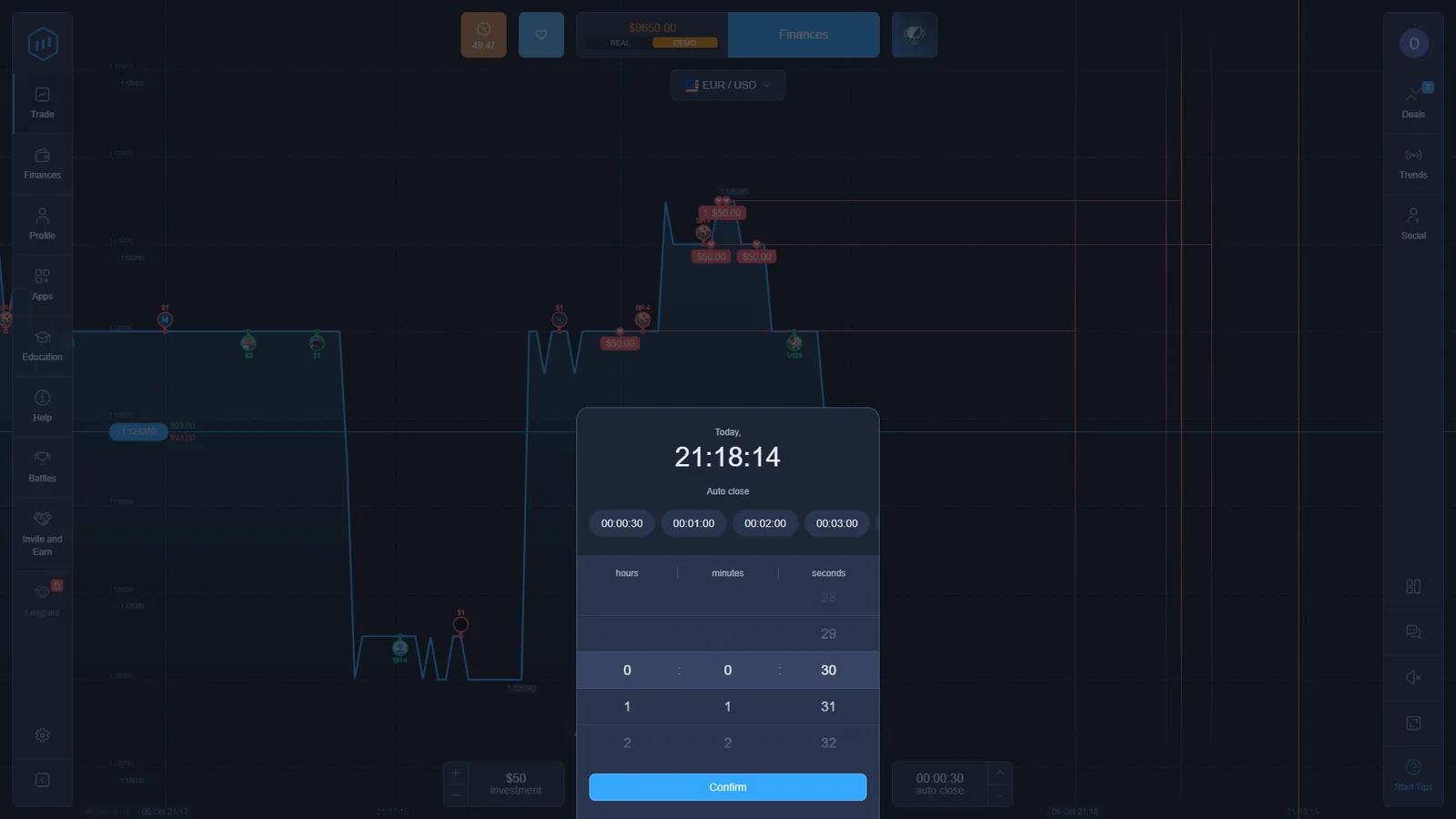
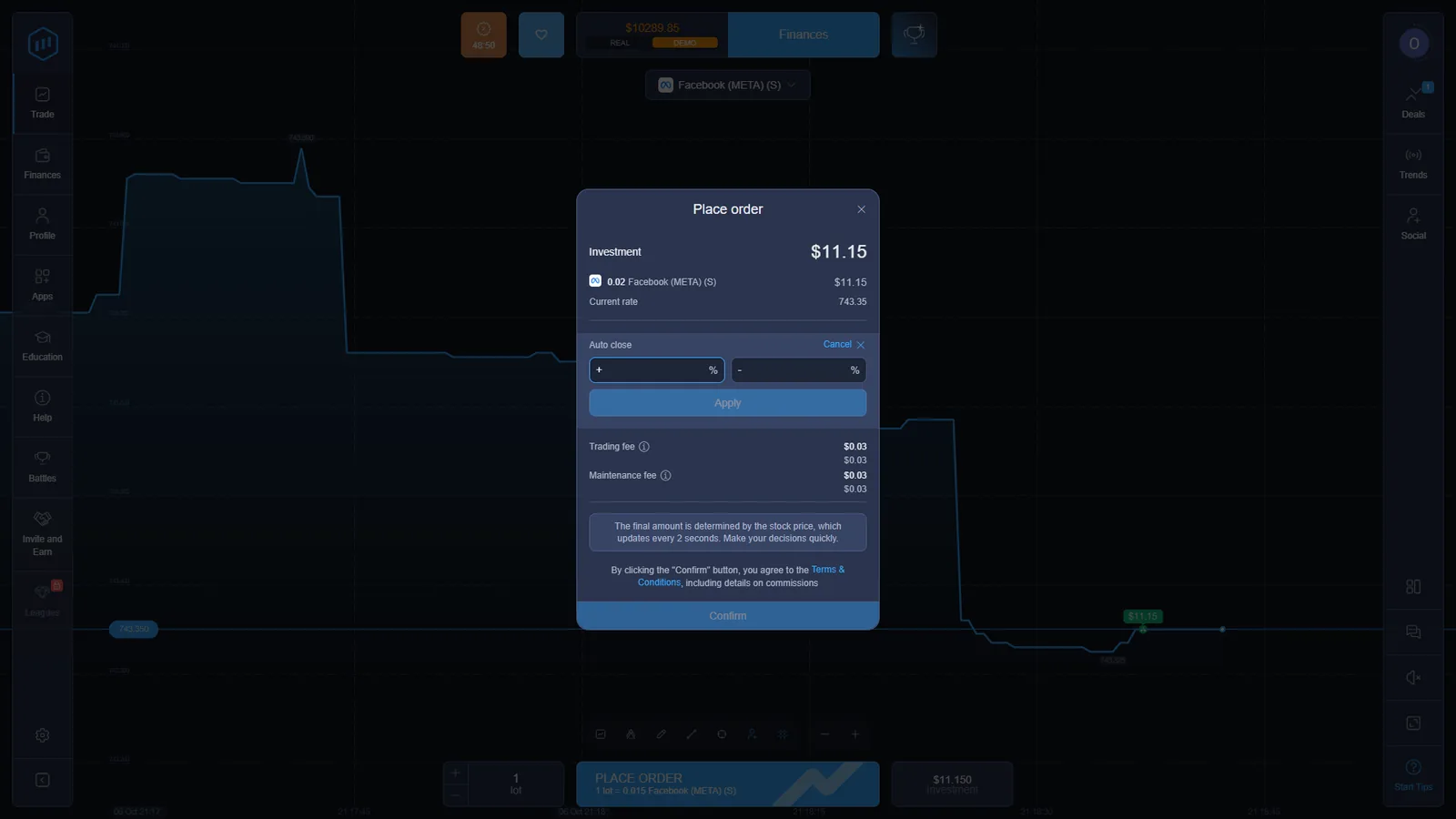
In Trading Mode we captured $50 virtual investments, an 86% displayed payout on EUR/USD and auto-close choices including 30 seconds, 1, 2 and 3 minutes. In Stocks Mode, a Facebook order exposed 0.02 lots, an investment value around $11.15, TP/SL, trading and maintenance fees, while the opened position showed opening/current rate, Order ID and manual Close. Current ExpertOption Terms classify the Stocks product as non-leveraged CFD trading. See the full ExpertOption platform check →
EO Broker: Two Different Workflows
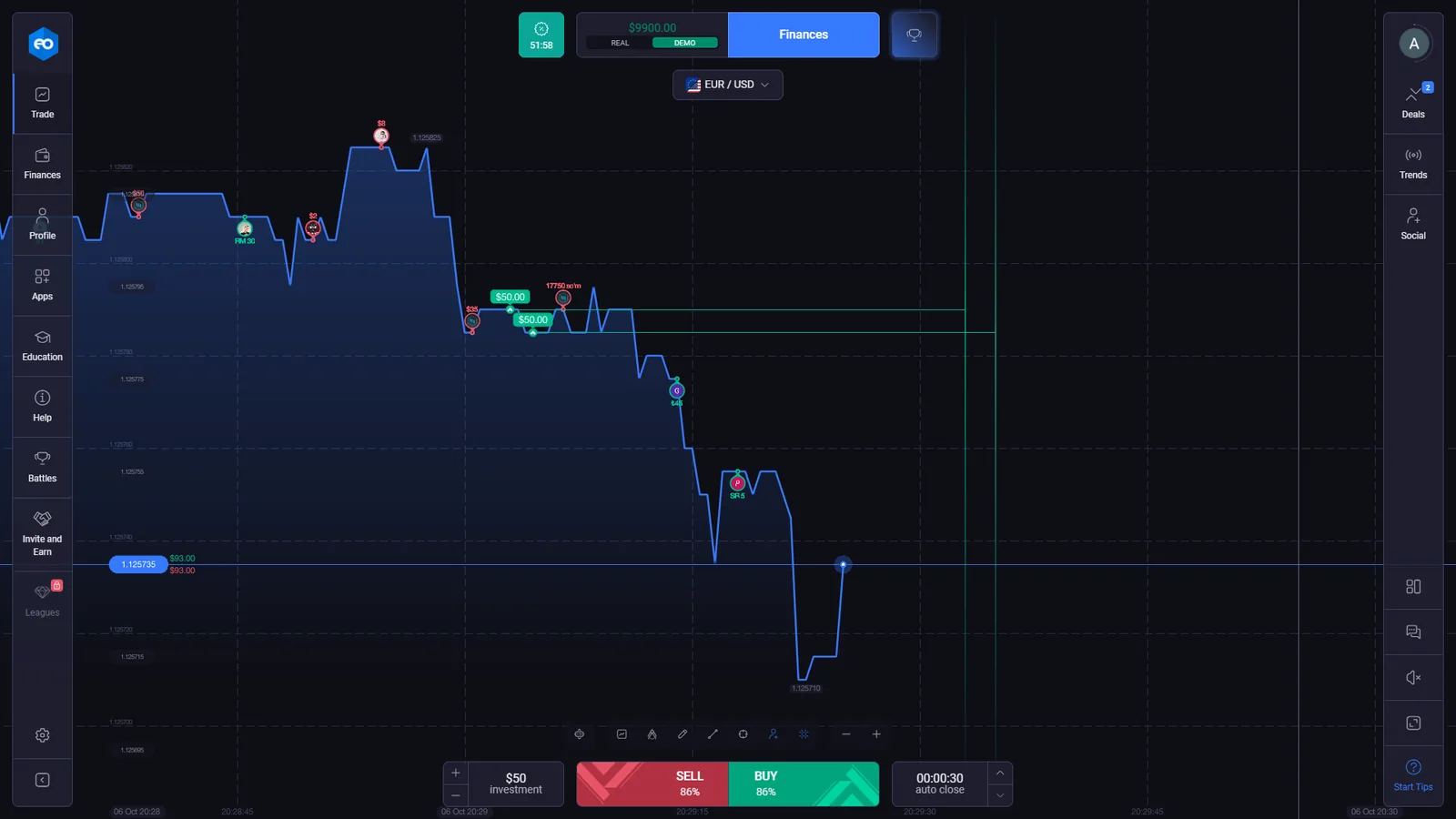
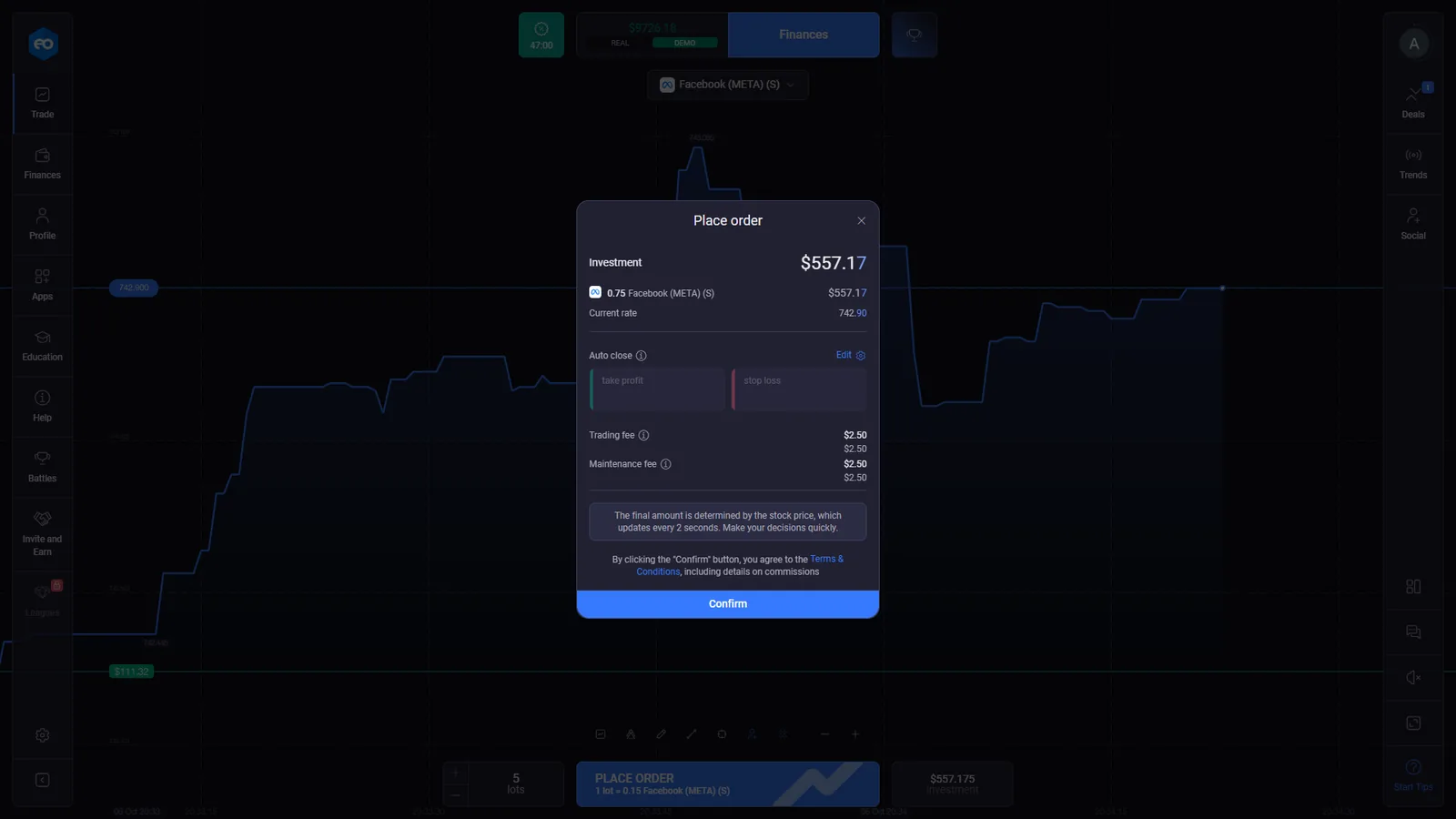
EO Broker makes the contrast equally visible. Trading Mode uses a fixed-time Digital Options workflow, while Stocks Mode uses lots and price-based P/L management. Current EO Broker Terms define Stock Trading as non-leveraged CFD trading and state that commission plus admin or maintenance charges can apply. See the full EO Broker platform check →
Other current product-level contrasts are documented in Tickz Stocks Mode, which exposes lot and TP/SL controls, and Exnova Margin, where the demo interface shows leverage and variable position P/L alongside a separate Digital ticket. Interface features alone do not establish a legal CFD classification.
Regulation and Product Availability
Digital Options and CFDs should not be treated as one regulatory category. The legal classification depends on the actual contract, provider, entity and jurisdiction. A menu label such as “Digital,” “Stock Trading” or “Perpetual Futures” does not by itself answer the regulatory question.
The UK gives a clear example of different treatment. The FCA prohibits the sale, marketing and distribution of binary options to retail consumers. Retail CFDs remain available under a separate intervention regime that includes leverage limits, a 50% margin close-out rule, negative-balance protection, restrictions on incentives and standardized risk warnings.
Those UK rules should not be projected onto every country or every product carrying a similar commercial name. Before funding an account, identify the legal entity, current product terms and restrictions that apply to your jurisdiction. Our pre-deposit verification checklist covers that workflow.
A fixed-time contract can lose the amount committed to the trade. A CFD can expose the account to variable P/L, costs and, where applicable, leverage. Account protections and maximum loss depend on the specific product and regulatory framework.
Digital Options vs CFDs FAQ
What is the main difference between Digital Options and CFDs?
In the fixed-time Digital Options workflows covered here, the contract starts with a defined price condition, a scheduled endpoint and a displayed potential return. A CFD position instead tracks the price difference between entry and close, so profit or loss changes with the market until the position is closed or otherwise terminated under the product rules.
Do CFDs always use leverage?
No. Leverage is common in retail CFD trading, but it is not a universal requirement of every CFD product. ExpertOption and EO Broker currently define their Stock Trading products as non-leveraged CFD trading in their Terms.
Do Digital Options always have to stay open until expiry?
No. A scheduled expiry or auto-close is part of the fixed-time contract, but some platforms also expose an early-exit function. We directly observed early Sell on IQ Option Digital and an early Close value in EO Broker Trading Mode.
Is a CFD the same as owning the underlying stock or asset?
No. A CFD is a derivative exposure rather than ordinary ownership of the underlying asset. ExpertOption and EO Broker Terms specifically state that their Stock Trading transactions do not provide physical delivery of the underlying stock.
Are CFD fees the same as a Digital Options payout?
No. A displayed Digital Options payout describes the contract return shown before entry in the checked fixed-time workflows. CFD costs can instead include commissions, spreads, financing or product-specific charges. In ExpertOption and EO Broker Stocks Mode we directly observed trading and maintenance fee fields.
Which is safer, Digital Options or CFDs?
There is no universal answer based only on the product label. The risk structure is different: a fixed-time trade can lose the amount committed to that contract, while CFD profit and loss varies with price movement and the position structure. Leverage, account protections, fees and jurisdiction can materially change CFD risk.
Are Digital Options and CFDs regulated the same way?
No. Regulation depends on the legal classification, provider and jurisdiction. In the UK, retail CFDs are subject to leverage limits, margin close-out and negative-balance protections, while binary options are prohibited for retail consumers. A platform label by itself does not determine the legal classification.
Are perpetual futures automatically different from CFDs?
Not necessarily as a legal classification. Our BinoDex check found a Perpetual Futures workflow with Long/Short, margin, funding and leverage controls, but ESMA stated in 2026 that some products marketed as perpetual futures or perpetual contracts may fall within CFD product-intervention rules if they meet the CFD definition.

Alex checks live trading interfaces, product labels, demo workflows and primary legal sources for DigitalOptions.co. This comparison uses first-hand ExpertOption and EO Broker evidence together with current platform terms and regulator material.