DigitalOptions.co checks trading platforms through direct interface observation, hands-on product testing and primary-source research. We document current product labels, trading mechanics, demo workflows, payouts, expiry controls, payment screens and verification processes before using those facts in our platform comparisons.
The goal is simple: describe the product that a user can actually see and use, and keep each claim within the evidence collected for that page.
By Alex Vega · Independent web publisher · Updated October 2026
What We Check Before Publishing
A trading platform can look simple from the outside while presenting very different mechanics once the account or terminal is opened. Before publishing a platform page, we first establish what the product actually is and how it behaves in the current interface.
We check the name used by the platform itself, such as Digital, Digital Options, Fixed Time or Quick Trading. We then inspect the trade ticket to understand whether the product uses a direct Higher/Lower model, BUY/SELL controls, selectable strike levels, a reference price, early-close functionality or another structure.
We also record the practical conditions visible around the trade: the available asset types, trade amount controls, expiry choices, displayed payout or profitability, OTC availability where shown, open-position information and trade history.
Account-level checks include demo or practice access, account settings, mobile or browser use, cashier screens, payment methods, withdrawal interfaces, identity-verification steps and account-security settings when those areas are relevant and accessible.
The live product interface is the primary reference for how a platform currently presents its trading model.
Direct Platform Checks
Direct observation is the core of our platform work.
Alex Vega accesses the relevant trading interface and checks the controls and labels shown to the user. This includes the asset selector, chart, order panel, amount field, direction controls, expiry selector, strike levels, expected return, active-position panel and completed trade history where those elements are present.
This matters because terminology alone does not tell the whole story. Two platforms can both be associated with Digital Options while using very different trading mechanics. One may present a straightforward Up/Down ticket based on a reference price. Another may offer selectable strike levels with different displayed returns. A third may call a related short-duration product Fixed Time or Quick Trading.
DigitalOptions.co records those distinctions from the product itself rather than flattening every short-term directional contract into one interface model.
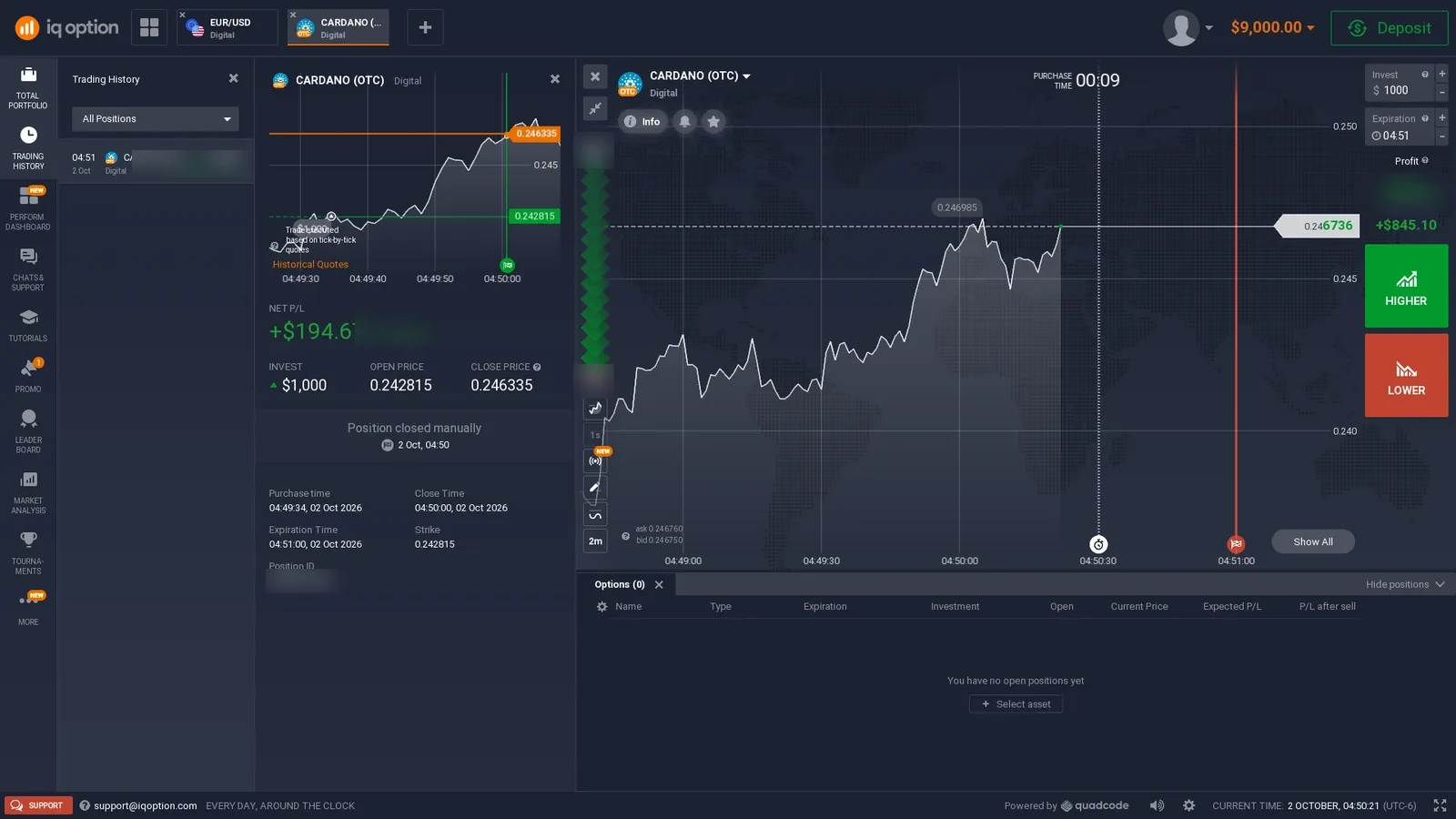
Demo and Trade Evidence
Demo and practice accounts are useful because they expose the real trading workflow without relying only on marketing pages.
When demo access is available, we use it to understand how a trade is configured from start to finish. That can include selecting an asset, setting the trade amount, choosing an expiry, selecting Higher or Lower or a specific strike, opening the position and checking the result in trade history.
This gives us evidence about the operating flow of the platform rather than only its pre-trade screen.
Demo results are preserved as test records of the platform workflow, including profitable and losing outcomes when they occur. The purpose of the trade record is to document how the product behaves, how the position is displayed and what information remains available after settlement.
If a platform offers additional controls, such as early Sell, pending orders, trade copying or signals, those features are described when they are visible in the checked product or supported by an appropriate primary source.
Payments, Withdrawals and Identity Verification
A platform comparison should also cover what happens outside the chart.
We inspect the account and cashier areas to record the payment methods displayed, supported currencies or cryptocurrency networks, minimum amounts shown for individual methods and other practical funding information available in the checked account.
Withdrawal screens are reviewed in the same way. We record the methods, limits, processing estimates or account requirements displayed in the interface when those details are relevant to the page.
Payment and withdrawal options can vary by region, account and payment provider, so this data is reported in the context in which it was observed.
Identity-verification checks can include email confirmation, personal-information forms, proof-of-identity requirements, third-party verification services and security options such as two-factor authentication.
These checks help connect the trading product with the real account workflow a user encounters after registration.
Primary Sources and Source Priority
Not every useful fact comes from the trading terminal. DigitalOptions.co also uses primary sources when they are better suited to the information being checked.
Direct platform observation is the first source for current interface behavior: product labels, trade controls, asset lists, payout displays, expiry settings, cashier screens and verification steps.
Official product documentation is used for information such as platform features, product explanations and account procedures that may not be fully visible in one session.
Operator terms, legal pages and policy documents are used for company information, contractual rules, account restrictions and other formal conditions.
Official regulator or public records are used when a page discusses regulatory or company-status information that needs an appropriate primary legal or regulatory record.
Secondary sources may provide context, but an available primary source remains the preferred basis for the factual claim it supports.
How We Describe Evidence
DigitalOptions.co uses evidence terms consistently so readers can understand where a statement comes from.
Observed
Alex personally saw the information in the live platform or logged-in account interface.
Checked
The fact passed through the site’s verification process using direct observation and/or an appropriate primary source.
Source-verified
The information was confirmed through official product documentation, operator terms, legal material, regulator records or another suitable primary source.
Tested
Alex actually performed the relevant platform action or test.
Completed
An action was carried through to its result and that completion is part of the evidence.
This vocabulary keeps interface observations, published platform information and completed first-hand actions clearly separated.
Screenshots and Dated Evidence
Screenshots on DigitalOptions.co support specific factual statements.
A trading screenshot may document a product label, selectable strike levels, expiry choices or an open position. A cashier screenshot may show payment methods or a displayed minimum. A verification screenshot may document the identity steps presented by the account.
Sensitive account details are removed or masked before an image is published. Images may also be cropped to focus on the relevant interface element while preserving the meaning of the original screen.
For checks that are easier to understand as a sequence, screen recordings or multiple screenshots can document the workflow.
The date of the check is important because trading interfaces and account conditions change. Evidence dates allow a current observation to be distinguished from older platform information.
Payouts, Availability and Other Changing Data
Some platform information is inherently dynamic.
Displayed payouts or profitability can change by asset, session, strike, market condition or product type. OTC assets can appear or disappear. Payment methods and minimum amounts can vary by account or region. Expiry choices can change with the selected asset or current product.
Dynamic values are therefore reported with the context and date of the check rather than treated as permanent platform specifications.
A percentage displayed during one session is evidence of what the platform showed in that session. The live trading ticket remains the relevant source for the value available before a new trade.
Material platform changes trigger a recheck when they affect published information. When a new check replaces a previously published fact, the page and its evidence date are updated.
Updates and Corrections
DigitalOptions.co updates content when a platform changes in a way that materially affects the information on the page.
This can include a change to the product interface, trading controls, payment methods, verification process, operator information or other practical account details.
When a material fact is updated, the supporting copy and page modification date are updated with it.
Readers and platform operators can report outdated or incorrect information through the Contact page. Correction requests are evaluated against current evidence.
Affiliate Relationships
DigitalOptions.co is funded through affiliate relationships.
Some platform links are commercial links. If an eligible user follows one of those links and later completes an action covered by the relevant affiliate agreement, DigitalOptions.co may receive compensation.
Commercial relationships can influence which platforms receive commercial placement or direct calls to action.
The factual description of a platform interface, account screen, payment method, verification step or primary-source record remains tied to the evidence collected for that page.
More detail is available in the Affiliate Disclosure.
Who Performs the Platform Checks?
Alex Vega is the independent web publisher behind the platform checks published on DigitalOptions.co.
For DigitalOptions.co, Alex checks online trading platforms and product interfaces firsthand. His work includes account access, demo workflows, trading mechanics, expiry and strike controls, payment screens, withdrawal interfaces, identity verification, mobile usability and relevant primary sources.
The same evidence rules used across DigitalOptions.co apply to material published under his name: observations are reported as observations, tested actions are identified as tests, and primary-source information is kept distinct from live-interface evidence.
Related Pages
About DigitalOptions.co
What the site publishes and how the project is structured.
Editorial Policy
Source standards, updates, corrections and editorial responsibility.
Affiliate Disclosure
How commercial relationships and affiliate links work.
Responsible Trading
Information about product risk, eligibility and account decisions.