Product terminology · five platform checks · October 2026
Digital Options vs Binary Options: Same Name or Different Product?
There is no honest one-line rule that says every Digital Option is different from every Binary Option. In formal derivatives terminology the words can be synonyms. On retail trading platforms, however, the same labels are also used for different trade-ticket designs. We compare the mechanics first and the marketing name second.
Are Digital Options and Binary Options the Same?
Sometimes yes, sometimes no in platform usage. The safest way to understand the terminology is to separate a formal contract definition from the product labels used by individual trading platforms.
In formal derivatives language, binary option describes a contract with two payoff outcomes, and digital option can be used as another name for that structure. The CFTC glossary explicitly points “Digital Option” to “Binary Option,” while the Options Clearing Corporation says binary options are also sometimes called digital options.
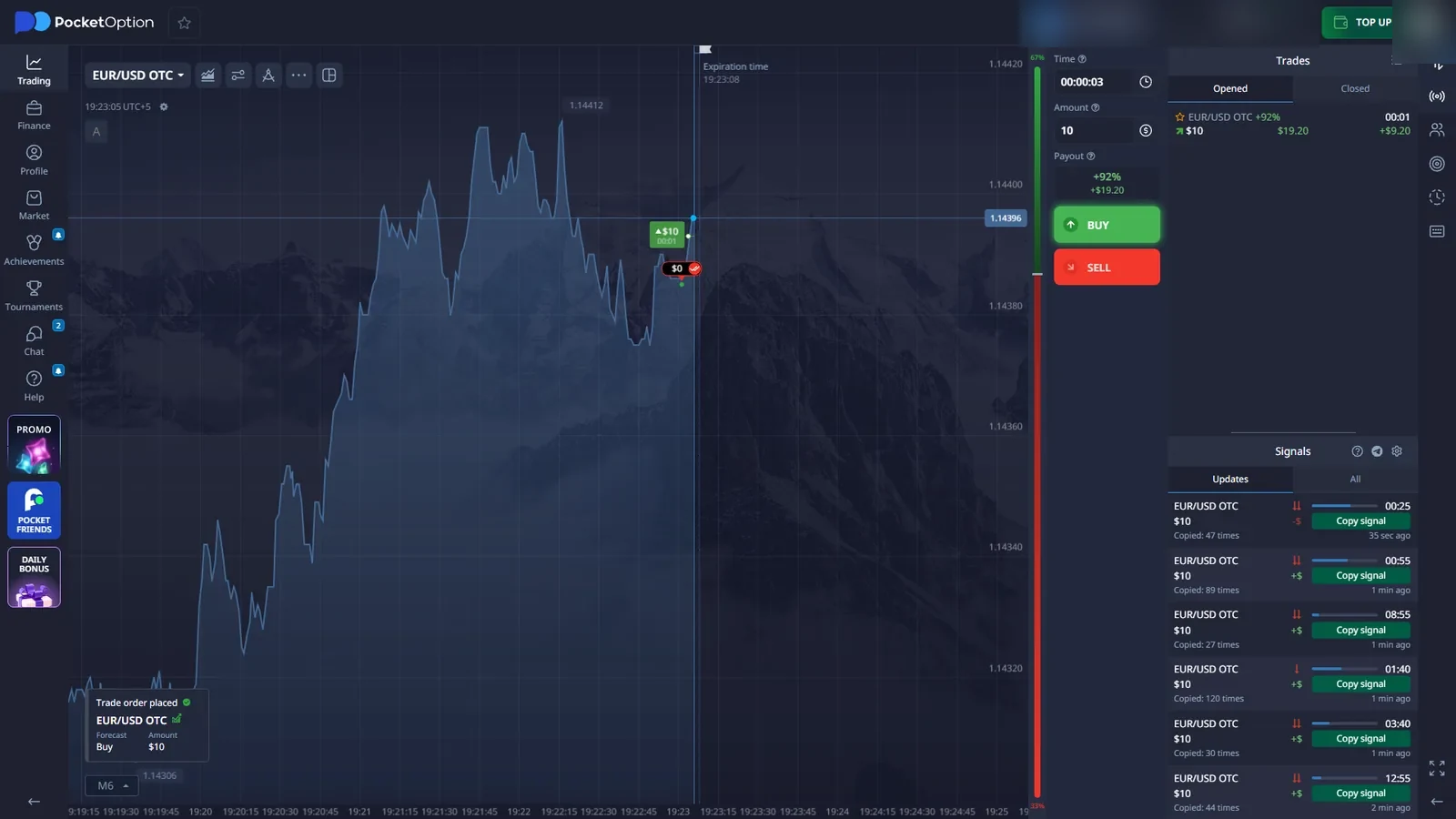
Retail platforms are less consistent. Some use Digital Options for a simple Up/Down fixed-expiry workflow. IQ Option uses the label for a more specific selectable-strike product. Binolla’s terminal says Fixed Time. Pocket Option currently says Quick Trading. Those labels overlap with binary-options terminology, but the controls visible to the user are not identical.
Binary Option: fixed amount or zero. Digital Option: “See Binary Option.”
Primary source: CFTC Futures Glossary.Binary options can also be called digital options, fixed return options or all-or-nothing options.
Primary source: OCC By-Laws, Article XIV.Formal Definitions and Platform Labels Describe Different Layers
Contract family
Regulators, clearing organizations and derivatives texts can use binary and digital for the same all-or-nothing payoff family. This is a contract-definition layer.
Platform product name
A broker can use Digital, Digital Options, Fixed Time or Quick Trading as the name shown in its terminal. That label tells you how the platform organizes the product, not necessarily how every other provider uses the same word.
Actual trade ticket
The practical differences appear in the controls: reference price or selectable strike, expiry choices, displayed return, early close, pending orders and the settlement rule.
Our rule: DigitalOptions.co does not rename a product to fit a keyword. We report the current UI label, then describe the mechanics visible in the checked account or supported by the relevant primary source.
How the Products Differ on Quotex, IQ Option, BinoDex, Binolla and Pocket Option
The same search query can lead to five noticeably different interfaces. This is why a platform-by-platform comparison is more useful than a universal definition.
| Platform | Current label we use | Direction / strike structure | What stood out in our check |
|---|---|---|---|
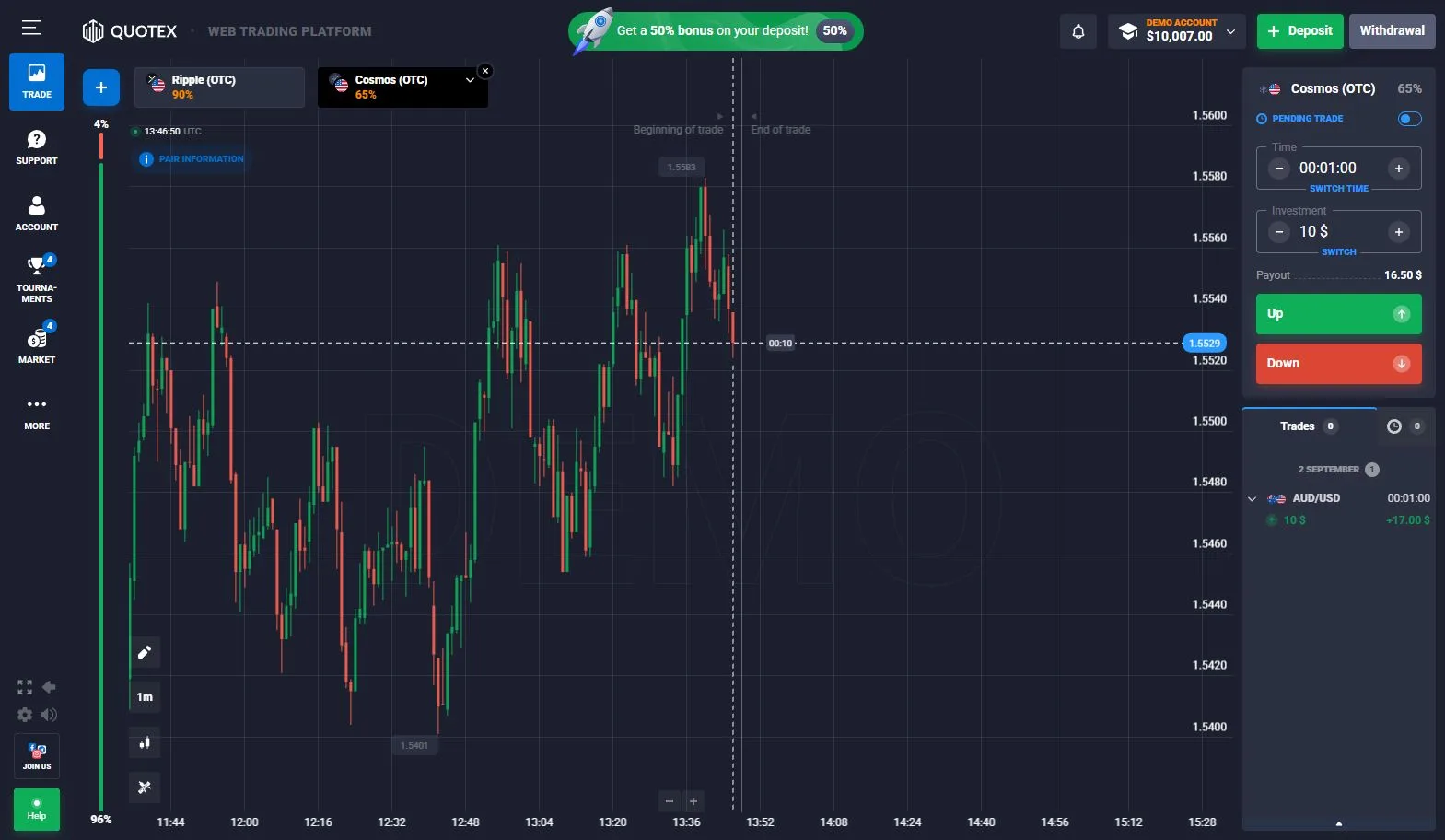
| Quotex | Digital Options | Direct Up / Down around the active reference price | Amount, timing/expiry and displayed payout are set before entry. Current legal wording also uses Digital Trading / binary-option terminology in context. |
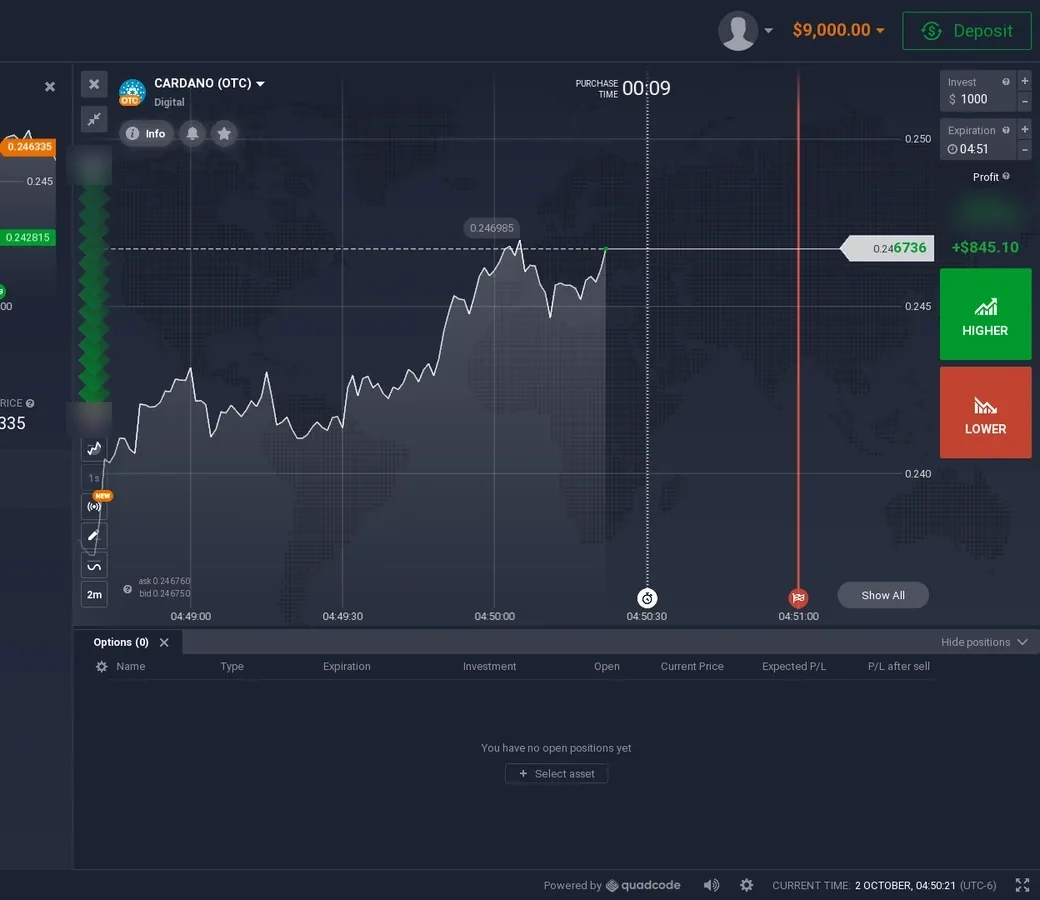
| IQ Option | Digital | Selectable strike prices + Higher / Lower | Multiple strike levels, strike-dependent profitability and manual early Sell were visible in our current Digital check. |
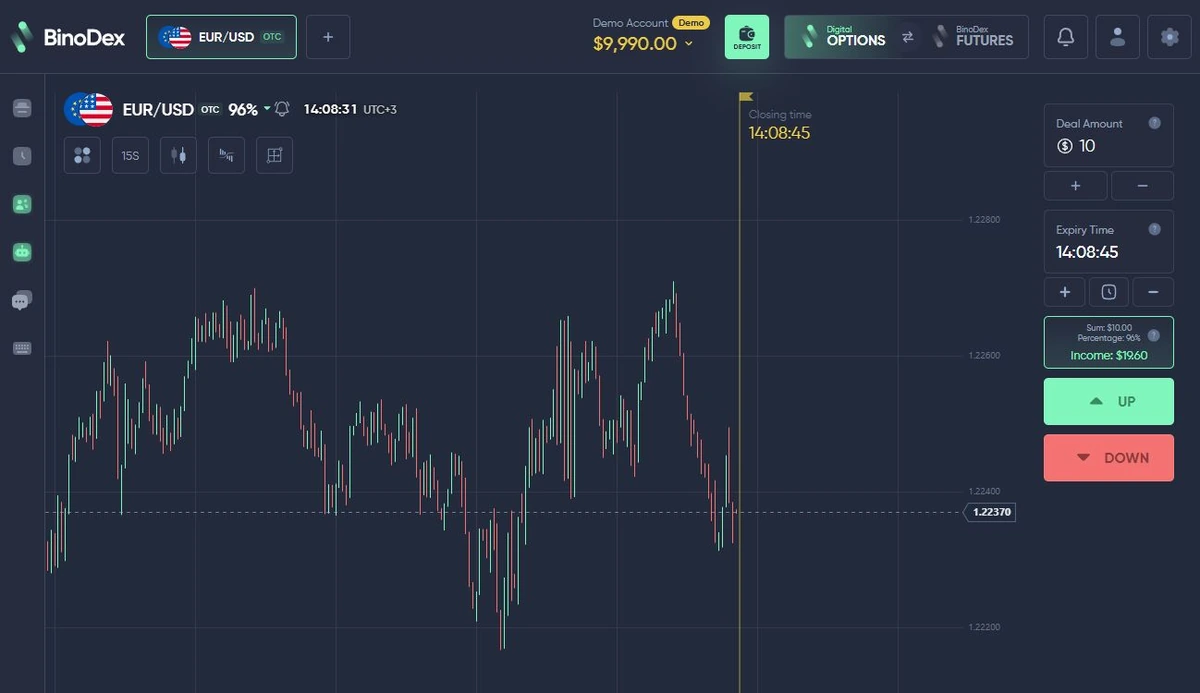
| BinoDex | Digital Options | Direct Up / Down | The demo ticket exposed asset, amount, expiry, current payout and Up / Down controls. We completed a demo trade and checked the finished order in history. |
| Binolla | Fixed Time | Higher / Lower with fixed expiry workflow | The live terminal says Fixed Time. Binolla education also uses Digital Option, Binary Option, Binary contract and Fixed-Time Contract terminology. |
| Pocket Option | Quick Trading / QT Demo | BUY / SELL directional ticket | The current short-duration workspace is labelled Quick Trading rather than a separate UI-labelled Digital Options mode. Our October check exposed a three-second setting. |
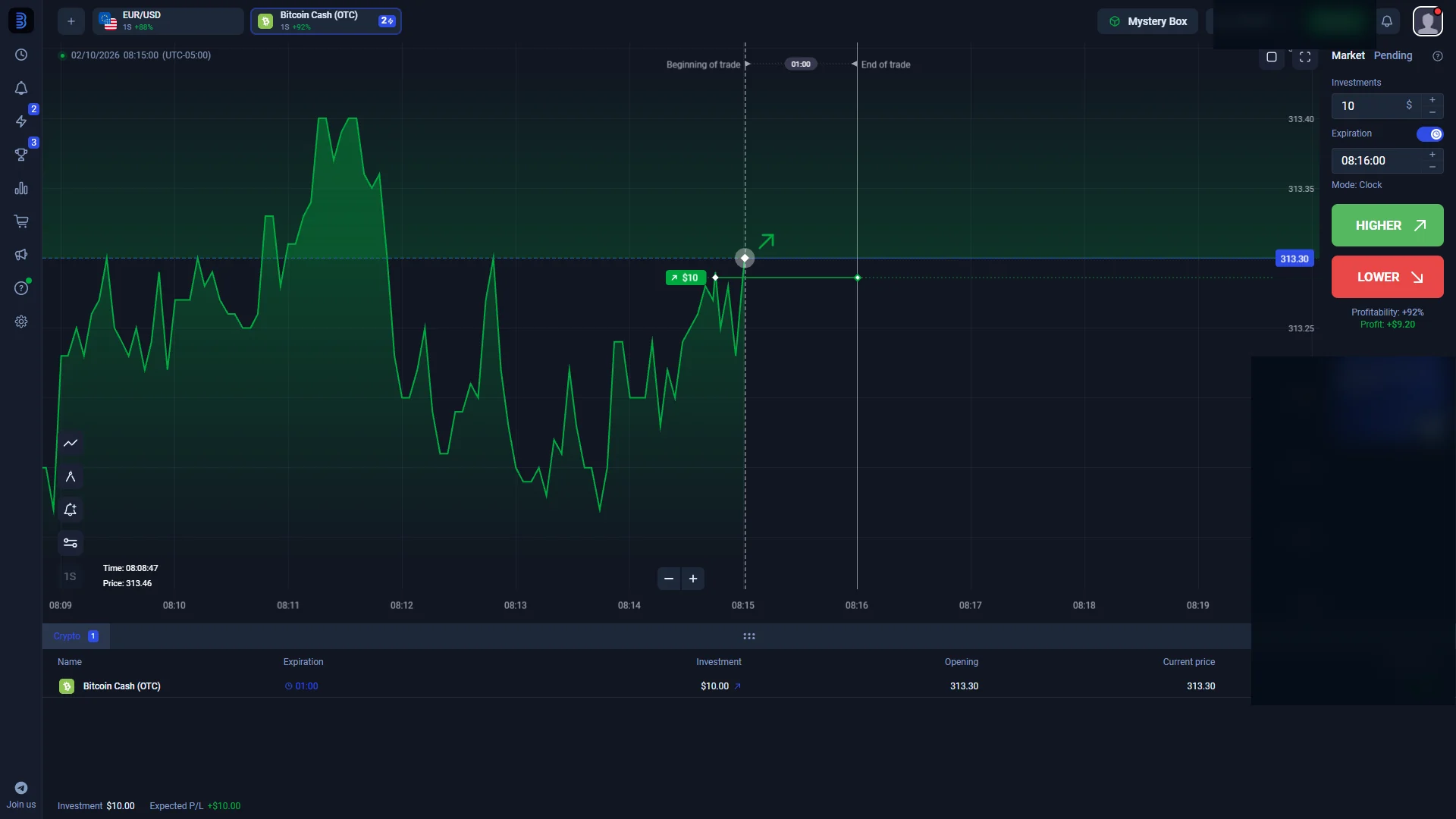
A newer platform-specific illustration appears in our Exnova Digital and Binary evidence: its checked terminal exposes Digital and Binary as separate selectable product labels, with their own trade tickets. This example is additional to the five-platform comparison above.
Six Mechanics That Matter More Than the Name
Is the comparison level automatically tied to the current price, or can you choose among multiple strike levels? IQ Option is the clearest selectable-strike example in our current set.
Check how the contract end time is selected. A product can use fixed expiry slots, very short trade times or a wider range depending on the active asset and account.
Some tickets show one return for the current configuration. Others change the displayed profitability when a different strike is selected. Session values should not be treated as permanent rates.
Some products settle only at expiry. Others can expose a Sell or early-close function. We directly observed manual early Sell in IQ Option Digital.
What happens if the settlement price equals the reference or selected strike? The answer comes from the specific product terms, not from the word “digital” by itself.
Market entry, pending orders, trade history and post-trade records can differ. Binolla, for example, exposed a separate pending-order flow in addition to its ordinary Fixed Time market ticket.
Reference Price vs Selectable Strike
This example isolates the contract condition only. It does not use a real payout percentage and it is not a trading strategy.
A Higher / Up contract can be defined as: finish above 100 at expiry.
If the user selects 101, the Higher condition becomes: finish above 101 at expiry. The displayed potential return can also change with the selected strike.
What changed? The contract condition. Moving the comparison level from 100 to 101 does not make the trade safer and does not predict the outcome.
How to Identify What a Platform Actually Offers in About One Minute
Read the live product label. Use what the current account actually calls the mode: Digital, Digital Options, Fixed Time, Quick Trading or something else.
Open the trade ticket. Look for asset, amount, direction, expiry/trade time, strike/reference price and displayed return.
Move the configurable controls. If there are multiple strike levels, see whether the displayed profitability changes with the selected strike.
Check position management. Look for early Sell, cancel, pending-order or other controls that change the workflow after or before entry.
Check the formal terms. Product agreements can use broader legal terminology than the terminal. Keep both layers in context rather than forcing one label onto the other.
Different Mechanics Do Not Remove the Trading Risk
A selectable strike, a different product label or an early-close button does not make a short-duration derivative safe. Depending on the product terms, an unsuccessful trade can result in losing some or all of the amount committed to that position.
Availability also varies by jurisdiction, operating entity and account region. A platform can offer one product to one account population and a different set of products elsewhere. That is another reason not to infer availability from a generic definition page.
This guide explains product terminology and interface mechanics. It is not personalized financial advice and does not claim that one contract structure is better for a particular user.
Responsible Trading→Digital Options vs Binary Options FAQ
Are Digital Options the same as Binary Options?
Sometimes. In formal derivatives terminology, digital option can be another name for a binary option. On retail trading platforms, however, the label Digital Options can also be used for a specific interface with mechanics that differ from a simpler Up/Down or fixed-time ticket. The product specification matters more than the name alone.
What is the clearest difference on IQ Option?
The current IQ Option Digital interface we checked uses selectable strike prices. The selected strike changes the condition that must be met at expiry and the displayed potential profitability. The platform also exposed an early Sell function in our check.
Does Quotex call its product Binary Options or Digital Options?
The current Quotex trading product is presented as Digital Options. The demo terminal we checked uses a direct Up/Down workflow with asset, amount, timing and payout controls. Quotex legal wording also uses Digital Trading and binary-option terminology in a contractual context, which shows why labels must be read in context.
Why does Binolla use the term Fixed Time?
The live Binolla terminal we checked labels the product Fixed Time. Binolla educational material also uses Digital Options, Binary Option, Binary contract and Fixed-Time Contract terminology for the same broader contract family. We therefore use the live terminal label first.
Is Pocket Option a Digital Options platform?
The current Pocket Option short-duration workspace we checked is labelled Quick Trading / QT Demo rather than a separate Digital Options mode. Its mechanics are related to fixed-time directional products, but we keep the current UI label instead of renaming it.
Do selectable strikes make Digital Options safer?
No. A different trade-ticket structure does not remove the risk of losing the amount committed to a short-duration trade. Risk depends on the product terms, position size, payout structure, account conditions and jurisdiction, not on the label Digital or Binary.
What should I check before comparing two products?
Check the current UI label, whether the strike is fixed or selectable, how expiry is chosen, how the potential return is displayed, whether early close is available, what happens at equality, and how the completed trade is recorded.

Alex Vega
Alex is the independent web publisher behind DigitalOptions.co. For this comparison he used the current terminology and first-hand platform evidence already documented in the five platform checks, then compared those observations with primary derivatives terminology.